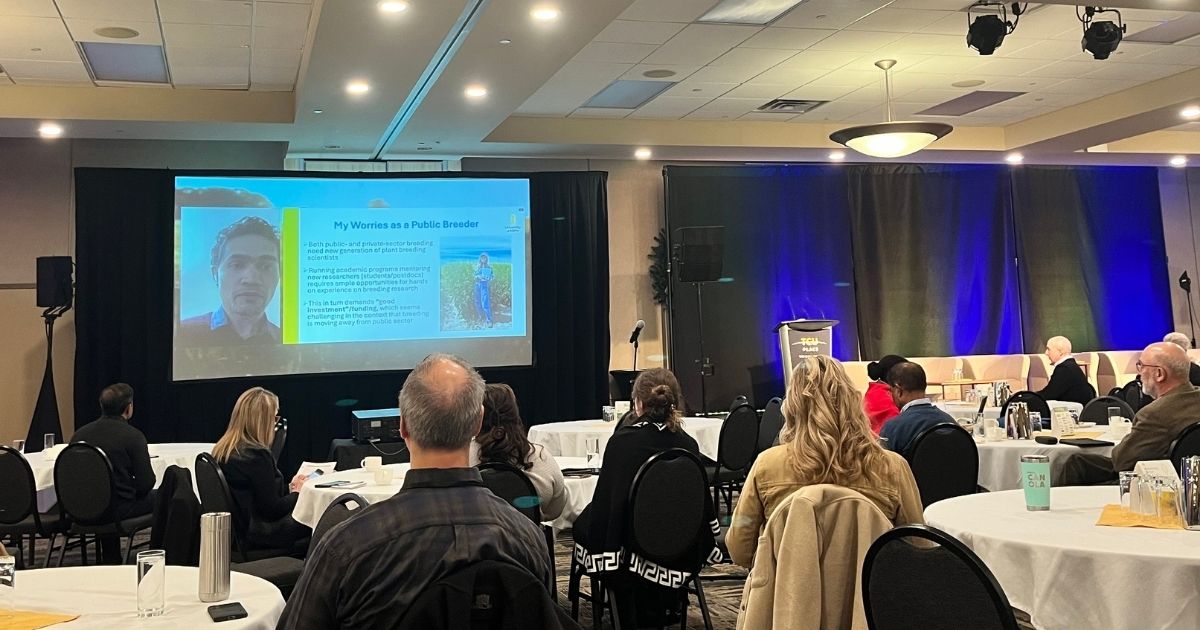
December 2-4 in Saskatoon, SK, farmers, researchers, scientists and people in between gathered for the annual Canola Week conference. The theme this year was simple: Profitability. “Whether you were a farmer, agronomist, researcher, or buyer, the same levers kept coming up: input costs and market access,” Jared Bento, Interim Research and Agronomy manager, explained. “Every session touched those realities, from fertility strategy to the future of biofuels and feed, because margin lives where agronomy meets markets. A big conversation this year was how we choose research priorities for impact that lasts,” Bento further added.
This event shares ideas, borrowing what works from Australia and Europe and building on a Canadian strength: consortia where would-be competitors co-fund fundamental research that lifts everyone. It’s a pragmatic way to de-risk big questions and speed adoption on the farm. Chuck Fossay, Director for Manitoba Canola Growers Association shared his thoughts on why he attends: “For farmers, it’s an opportunity to hear forecasts on potential pest issues for next year. You can also learn what projects the Canola Council of Canada and the three provincial canola groups are working on.”
Chris Manchur put it plainly: “Canola owes its success to innovation.” He pointed to the steady rise in best-management practices, regular soil testing and field-by-field fertility plans as quiet compounding wins. That same spirit drives disease research: Verticillium remains a Manitoba focus, while clubroot continues to command attention in Alberta and Saskatchewan. On the weed front, herbicide resistance is a cross-farm issue. The call to action was clear: work with your agronomist and provincial experts on rotations, mixes, rates, and non-chemical tactics that keep tools effective.
Markets brought good news and new questions. Statistics Canada’s latest report announced a record national average yield of 44.7 bu/ac, a reminder of what’s possible when genetics, management, and season line up. Looking ahead, biofuels remain an important demand driver for canola oil, while canola meal continues to find traction in fish and livestock rations. Those signals matter when you’re planning acres and inputs for next year.
If you haven’t joined Canola Week, consider it. In person or virtually, it’s where farmers hear pest outlooks, see exactly what the Canola Council of Canada and the provincial grower groups are moving forward, and ask blunt questions. You’ll also hear from innovators at the edge of breakthroughs, this year included a look at an RNAi treatment for flea beetles, aiming for about three weeks of control after application.
The value is practical: leave with sharper agronomy, clearer market context, and a sense of where research is headed so profitability isn’t abstract, it’s planned.